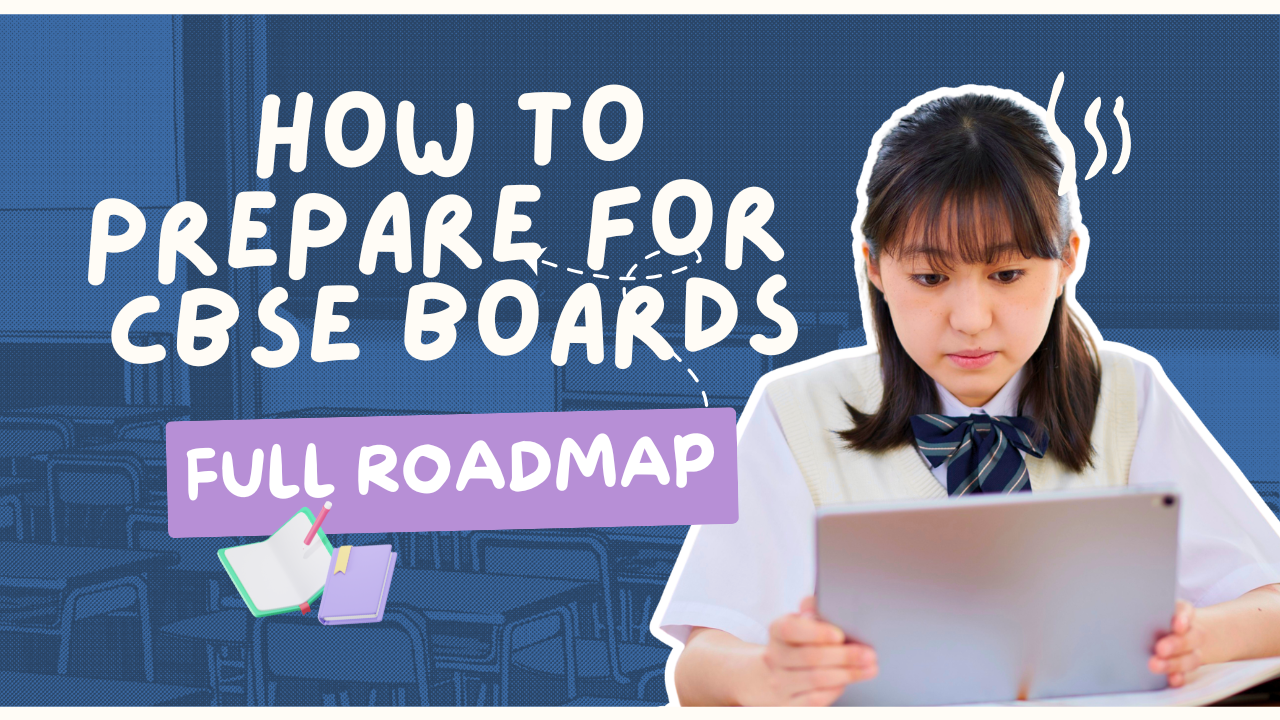
Every year, lakhs of students appear for the CBSE Board Exams, but only a few truly prepare with the right strategy. Success in CBSE Board Exams 2026 is not only about studying harder — it is about studying smarter, understanding concepts deeply, revising consistently, and managing time effectively.
Whether you are a Class 10 student building strong fundamentals or a Class 12 student preparing for higher education and competitive exams, this complete CBSE Board Exam Strategy 2026 will help you create a smart roadmap for the entire academic year.
This guide is useful for:
- CBSE Class 10 students
- CBSE Class 12 students
- Parents
- School teachers
- Coaching institutes
- Students aiming for 90%+ marks
CBSE Board Exam Strategy 2026 (Full-Year Plan)
1. April to June — Foundation Building Phase
Focus:
- Understand NCERT deeply
- Build conceptual clarity
- Develop disciplined study habits
What Students Should Do:
- Read every NCERT chapter carefully
- Make short notes while studying
- Practice basic numericals and theory questions
- Focus on understanding instead of rote learning
- Start a daily revision habit
Special Focus for Class 10:
- Science concepts
- Mathematics fundamentals
- Social Science maps and timelines
Special Focus for Class 12:
- Accountancy concepts
- Physics numericals
- Economics graphs
- Business Studies case studies
2. July to September — Practice & Application Phase
Focus:
- Question-solving skills
- Writing practice
- Time management
What Students Should Do:
- Start solving previous year questions
- Practice sample papers chapter-wise
- Improve answer presentation
- Attempt weekly mock tests
- Focus on weak chapters
Important Tip:
Most students only study theory. Toppers practice writing answers repeatedly.
3. October to December — Revision & Testing Phase
Focus:
- Full syllabus completion
- Speed improvement
- Mock exams
What Students Should Do:
- Revise all subjects regularly
- Solve full-length sample papers
- Practice board-style answers
- Analyze mistakes after every test
- Create formula sheets and quick revision notes
Best Strategy:
One revision = memory
Three revisions = confidence
4. January to February — Final Board Preparation Phase
Focus:
- High-yield revision
- Confidence building
- Stress management
What Students Should Do:
- Revise NCERT multiple times
- Solve latest CBSE sample papers
- Focus on important and repeated questions
- Avoid learning completely new topics
- Sleep properly and maintain health
Golden Rule:
Do not panic. Consistency matters more than last-minute pressure.
Subject-Wise Strategy for CBSE Boards 2026
Mathematics
- Practice daily
- Learn formulas conceptually
- Solve NCERT first, then exemplar
- Focus on step marking
Science
- Understand diagrams and concepts
- Practice numericals regularly
- Revise definitions and applications
Social Science
- Use timelines, flowcharts, and maps
- Learn answer presentation
- Focus on keywords
English
- Improve writing skills
- Practice literature answers
- Read unseen passages daily
Accountancy
- Understand journal logic
- Practice formats repeatedly
- Focus on adjustments and presentation
Economics
- Learn concepts visually
- Practice diagrams and numericals
- Understand real-world applications
Business Studies
- Learn through case studies
- Use headings and points
- Focus on application-based answers
Smart Study Tips for CBSE Students
- Study consistently instead of studying for long hours suddenly
- Follow NCERT seriously
- Avoid excessive book collection
- Make handwritten notes
- Use active recall and revision
- Solve previous year papers regularly
- Learn from mistakes
- Maintain proper sleep and health
Common Mistakes Students Should Avoid
❌ Rote memorization without understanding
❌ Ignoring NCERT books
❌ Leaving revision for the last month
❌ Studying without writing practice
❌ Comparing yourself with others
❌ Overusing social media during preparation
How should I prepare for CBSE Board Exams 2026?
Students should focus on NCERT, regular revision, mock tests, previous year papers, and conceptual understanding throughout the academic year.
Is NCERT enough for CBSE Board Exams 2026?
Yes, NCERT is the foundation for CBSE board exams. Students should master NCERT before using additional reference books.
How many hours should a Class 10 or 12 student study daily?
Quality matters more than hours. A focused 4–6 hour self-study routine with consistency can produce excellent results.
When should students start preparing for CBSE Boards 2026?
The best time to start is from the beginning of the academic session so students can prepare without stress.
How can I score 90%+ in CBSE Board Exams?
Students should focus on conceptual learning, regular revision, answer writing practice, and solving sample papers consistently.
What is the biggest mistake students make during board preparation?
Most students focus only on reading instead of practicing answer writing and revision.
Which is more important: NCERT or reference books?
NCERT should always be the first priority for CBSE board preparation.
How many sample papers should students solve before boards?
Students should ideally solve 15–25 full-length sample papers before the board exams.